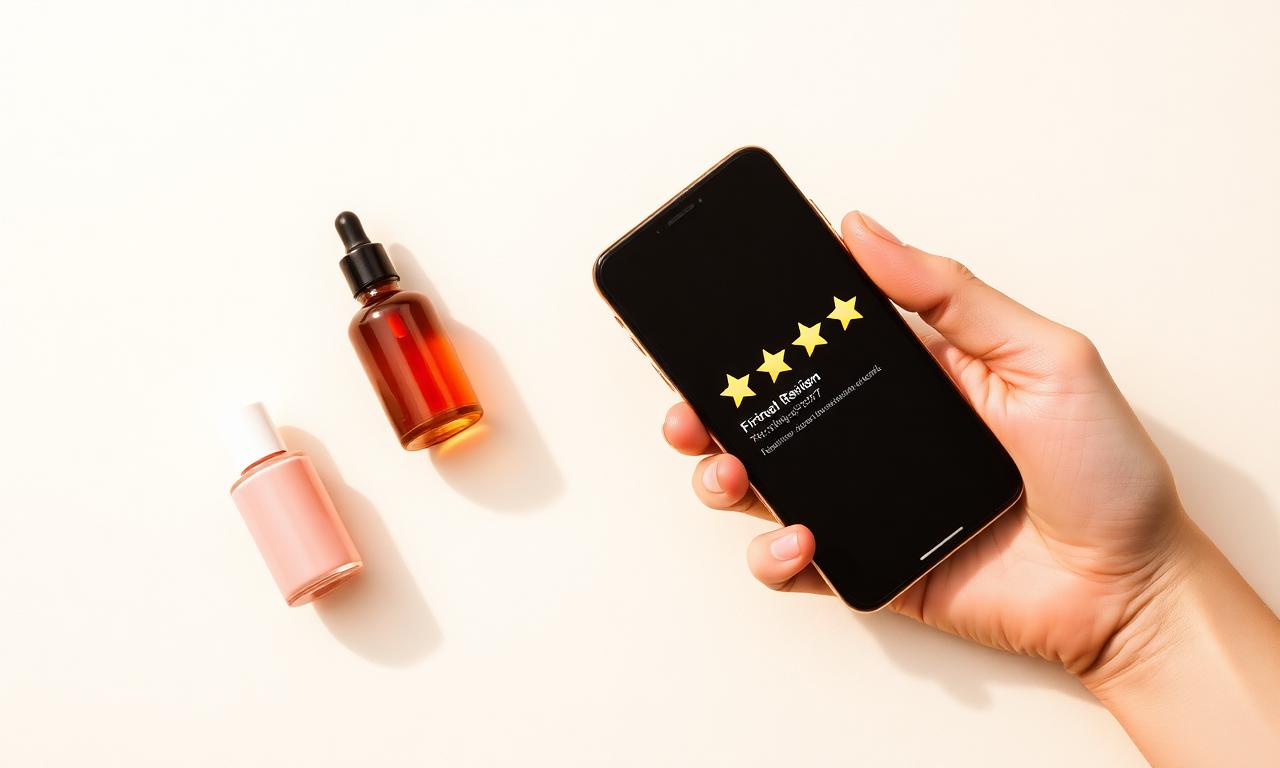
How to scale Shopify reviews without killing trust: the strategy modern DTC brands use
Volume is easy. Trust is hard. A practical Shopify review strategy that maximizes both — and a list of tactics to stop running today.

Most Shopify brands have a review app. Far fewer have a review strategy. The difference shows up on conversion rate, on AOV, and on how trustworthy the page actually feels to a first-time buyer scanning it for 11 seconds before deciding to bounce or buy.
This article is the playbook we run with Shopify brands doing 1 to 50 million in annual revenue. None of it is exotic. All of it is disciplined. The goal is the same in every case: more reviews, higher quality, more conversion lift, less risk.
The two failure modes
Mode one: not enough reviews. The PDP feels empty, especially on new SKUs. First-time buyers default to assuming the product is unproven and bounce to a competitor. Mode two: too many reviews that all sound the same — five stars, three sentences, no photo, no detail, suspicious cadence. The page reads gamed and savvy buyers, who are now most buyers, bounce for the opposite reason.
The job of a review strategy is to avoid both modes simultaneously. That requires deliberate choices about what you ask for, when you ask, who you ask, what you display and what you remove.
Principles that protect trust
- Verify every reviewer is a real buyer of that exact SKU — not the brand, the SKU.
- Display a healthy distribution — a 4.6 with a few 3s reads more honest than a 5.0 across the board.
- Lead with photo and video reviews — they are 5 to 10x more persuasive than text alone.
- Show recency — a recent review beats an older five-star one for a buyer evaluating whether the brand still cares.
- Reply to negative reviews publicly and well — this often converts better than no negative review at all.
- Surface review language inside the PDP body copy, not just the review block — buyers skim.
Timing the ask by category
There is no universal right moment. The best window depends on the category and the time-to-result of the product. The principle: ask after the customer has experienced the result they bought the product for.
- Skincare and supplements: 21 to 30 days post-delivery, after the customer has felt a result.
- Apparel and footwear: 7 to 14 days, after the first wear cycle.
- Accessories and home: 5 to 10 days, after first use.
- Fragrance: 14 to 21 days, after the scent has been worn out and lived with.
- Hair tools and devices: 28 to 45 days, after enough uses to form a real opinion.
Asking too early gets you "loved the packaging" reviews — pretty but useless. Asking too late means the customer has moved on or returned. Calibrate the window to the product, not the calendar.
Mission types beyond the star rating
A star rating with a paragraph is the lowest-value review format. The brands that are pulling away on Shopify use a portfolio of mission types and route customers to the one most likely to produce useful content based on their profile.
- Photo review — before/after, fit check, swatch, color match.
- Video review — 15 to 30 second first impression or result clip.
- Q&A — let buyers answer common pre-purchase questions, which doubles as PDP content.
- Long-form review — for hero products with high consideration and high price points.
- Comparison review — "I switched from X to Y because…" These convert switchers extremely well.
How to display reviews so they actually convert
Most Shopify review widgets are designed for moderators, not buyers. The default sort is recency. The default layout is a wall of text. The default media treatment is a small thumbnail. None of those decisions optimize for conversion.
- Default sort: most helpful, weighted by media and length.
- Pin one negative review with a great brand response above the fold — it is a trust accelerant.
- Filter by skin type, size, use case — let the buyer narrow to reviews that match them.
- Show photo grid above the text wall — photos are scanned first.
- Surface the top three benefits and top objection extracted by AI at the top of the block.
What to remove from your flow today
Subtraction is usually the highest-leverage move. Stop sending the same review request to every customer at day 7. Stop offering discounts in exchange for five-star reviews — this is a trust killer and increasingly a legal risk under FTC and EU rules. Stop hiding the average rating when it dips. Stop stacking incentives that bias the rating without disclosure.
Stop also treating reviews as a marketing tactic separate from CX, merch and product. The reviews you collect are the most accurate signal you will ever have about whether the product delivers on its promise. Treat them as the report card, not the press release.
The quarterly review audit
Once a quarter, run a 60-minute audit on three things: the average rating distribution per SKU, the photo-and-video coverage per SKU, and the top three themes from the last 90 days of reviews. Adjust your review request mix, your PDP copy and your merch decisions on the back of it. Brands that run this ritual consistently see compounding lift; brands that treat reviews as set-and-forget see decay.
"Trust is not built by the highest average rating. It is built by the most credible average rating."
Done well, your review system stops being a widget on a PDP and starts being one of the highest-ROI assets in the business — a permanent improvement to conversion rate, a continuous source of voice-of-customer language, and a shield against the growing wave of skepticism toward synthetic content.